
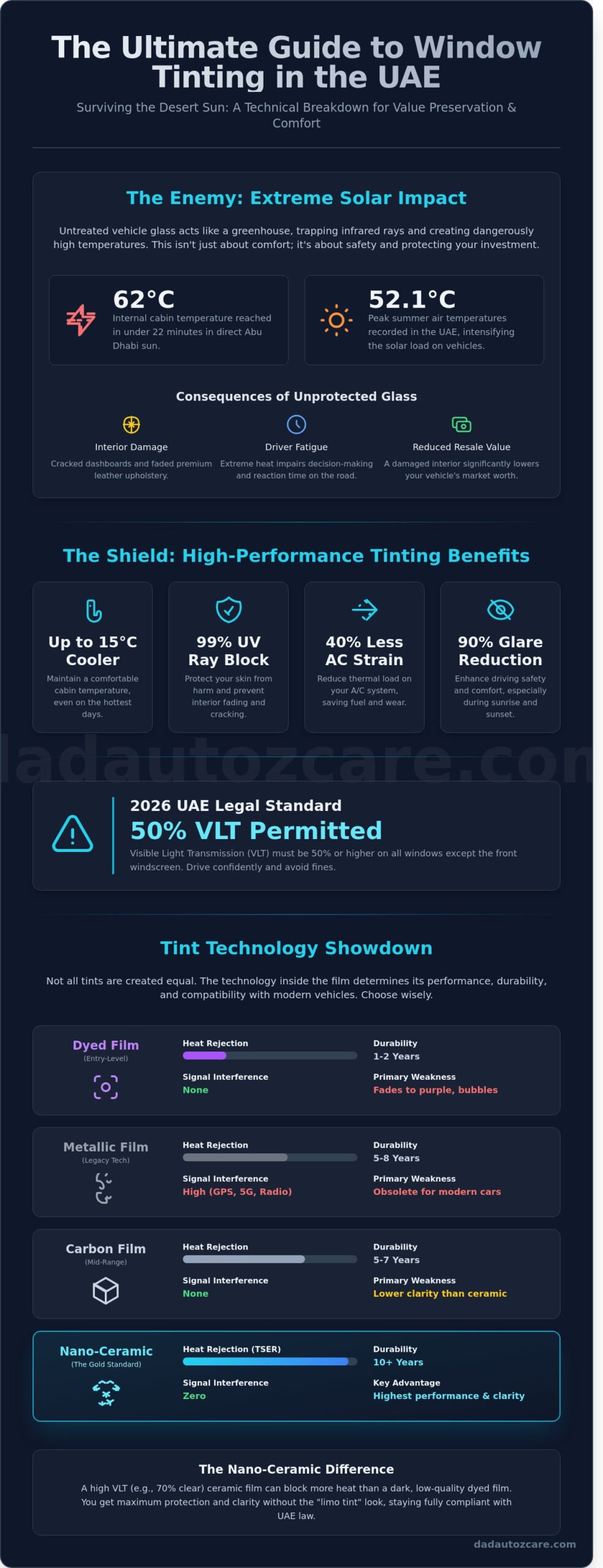
Did you know that a car parked in the Abu Dhabi sun can hit an internal temperature of 62°C in less than 22 minutes? This extreme heat doesn’t just make your commute unbearable; it actively destroys your vehicle’s interior. High-quality window tinting is no longer a luxury in the UAE. It’s a precision tool for survival and value preservation. You’ve probably felt the sting of a hot seatbelt or worried about the legal repercussions of choosing the wrong film percentage. We understand that you want a solution that balances elite aesthetics with uncompromising performance.
In this guide, you’ll master the essentials of heat-rejection technology to keep your cabin up to 15 degrees cooler. We’ll clarify the current RTA and police regulations so you can drive with confidence and zero fines. You’re going to discover how to select premium ceramic films that offer 99% UV protection without the risk of unsightly bubbling or peeling. We’ll explore the specific film grades designed for the 2026 desert climate to ensure your car remains a pristine, private sanctuary for years to come.
Key Takeaways
- Understand why high-performance protection is vital for preserving your vehicle’s premium interior from the intense desert sun and UV damage.
- Discover the technical evolution of window tinting materials and why nano-ceramic technology is the superior choice for modern vehicles with advanced electronics.
- Navigate the latest 2026 UAE legal standards to ensure your car remains compliant with the 50% VLT rule while maximizing heat rejection and privacy.
- Learn how to distinguish between basic films and precision-engineered solutions to achieve a flawless, factory-quality finish that stands the test of time.
Why Window Tinting is Essential for UAE Drivers
Modern window tinting is far more than a cosmetic upgrade; it’s a precision-engineered multi-layered polyester film designed for high-performance glass protection. In the UAE, where summer temperatures regularly peak at 52.1°C as recorded in July 2024, this technology becomes a functional necessity. It acts as a sophisticated barrier that preserves both the vehicle and the passenger’s well-being. Professional detailing standards dictate that protection starts with the glass, ensuring the interior remains a sanctuary against the harsh external environment.
By blocking solar energy, you reduce the thermal load on your air conditioning system by up to 40%. This efficiency means your cabin cools down faster and stays at a consistent temperature without overworking the compressor. Beyond the mechanical benefits, there’s a significant psychological advantage. Driving through the dense traffic of Dubai or Abu Dhabi feels less stressful with high-quality film. It provides a private environment, shielding you from the gaze of other motorists while maintaining perfect clarity from the inside out.
Beating the 50°C UAE Summer Heat
Untreated glass acts like a greenhouse, trapping short-wave infrared rays that spike internal temperatures. Research shows that a car parked in direct sun can reach 70°C inside within just 20 minutes. This extreme heat is a direct cause of driver fatigue, which impairs decision-making on the road. Heat rejection is the ability to block infrared radiation. By installing premium ceramic films, you can achieve a Total Solar Energy Rejection (TSER) rate of over 65%, creating a much safer and more comfortable driving experience.
Protecting Your Health and Vehicle Interior
The Arabian sun emits intense radiation throughout the year, making skin protection a daily priority. Quality window tinting blocks 99% of harmful UV rays, serving as a critical defense against skin damage and premature aging. It’s also a vital tool for preserving your vehicle’s resale value by keeping materials in showroom condition. Maintaining the integrity of your cabin is a hallmark of the detailing mindset, where every surface is treated as an asset.
- Interior Longevity: It prevents dashboard cracking and the fading of premium leather upholstery by neutralizing UV exposure.
- Glare Reduction: High-performance films cut glare by up to 90%, which is essential for safety during the blinding light of dawn and dusk.
- Value Retention: Keeping the interior in a factory-fresh state ensures a higher valuation when it’s time to sell or trade in.
Comparing Tint Technologies: Ceramic vs. Carbon vs. Dyed
The evolution of window tinting has shifted from simple aesthetic darkening to advanced molecular engineering. In the early 2000s, dyed films were the standard for basic privacy. By 2015, metallic films gained popularity for their superior heat rejection. However, metallic options are a poor choice for 2026 vehicle models. These films contain microscopic metal particles that disrupt GPS signals, 5G connectivity, and keyless entry systems. Modern drivers in the UAE now prioritize the Total Solar Energy Rejection (TSER) metric. This percentage measures the film’s ability to block UV rays, visible light, and infrared radiation. A high-quality film in Dubai must offer a TSER of at least 58% to effectively combat 48°C summer peaks.
- Dyed Films: Best for aesthetics on a strict budget; limited heat protection.
- Metallic Films: High heat rejection but causes signal interference.
- Carbon Films: Excellent durability with a matte finish; zero signal issues.
- Nano-Ceramic: The peak of heat rejection and clarity.
Nano-Ceramic: The Ultimate Desert Shield
Nano-ceramic technology represents the current gold standard for Middle Eastern climates. These films use non-conductive, non-metallic ceramic particles to isolate heat at the molecular level. You don’t need a 5% “limo tint” to stay cool. A 70% clear ceramic film can block more heat than a standard dark dyed film. Since they lack metal, these films never interfere with your mobile reception or radio clarity. While carbon films often last 5 to 7 years before showing wear, premium ceramic installations maintain their structural integrity and color for over 10 years. For those seeking this level of precision, choosing a premium detailing specialist ensures the film is applied with surgical accuracy.
Carbon and Dyed Films: Pros and Cons
Dyed films remain the entry-level budget option. They rely on a layer of dye to absorb heat, but the sun’s intensity in Abu Dhabi causes them to turn purple or bubble within 12 to 24 months. Carbon films offer a significant upgrade for the daily commuter. They provide a sleek matte finish and block approximately 40% of infrared heat. Carbon doesn’t contain metal, so it keeps your electronics functional. It’s a reliable mid-range choice for drivers who want better performance than dye but aren’t ready for the investment of top-tier ceramic. Most carbon products carry a 5 year warranty against fading, making them a practical value proposition for leased vehicles.
UAE Window Tinting Laws: Staying Legal in 2026
The UAE Federal Traffic Law, specifically following the 2017 amendments that remain the standard in 2026, sets a clear 50% limit for window tinting on side and rear windows. This percentage refers to Visible Light Transmission (VLT). It means at least 50% of external light must pass through the glass into the cabin. Don’t mistake this for the shade’s darkness; a 50% tint is a balanced medium that preserves visibility while allowing for high-performance heat rejection. Dubai Police and RTA inspectors use digital photometers to measure this density during annual inspections or random roadside checks. If your film measures even 1% over the limit, you’ll likely fail your registration renewal.
The “darker is better” myth is a dangerous trap for car owners. Many believe that pitch-black windows are necessary to survive the 50°C summer heat. In reality, modern nano-ceramic films provide 99% infrared heat rejection regardless of how dark they appear. Opting for illegal darkness levels doesn’t just compromise your night vision; it carries a standard fine of AED 1,500. Furthermore, the use of reflective or mirrored films is strictly prohibited. These finishes create hazardous glares for other drivers under the intense Arabian sun and can lead to immediate vehicle impoundment.
Understanding the 50% Tint Rule
Precision is vital when choosing your film. The 50% rule applies to the cumulative VLT of the glass and the film combined. Since most factory glass already has a slight 70% to 80% tint, adding a 50% film might push your total transparency below the legal threshold. Professional installers use calibrated meters to ensure the final result stays within the 50% limit. This methodical approach protects you from fines and ensures your vehicle remains an immaculate example of both style and law-abiding precision.
Legal Requirements for Commercial and Private Vehicles
Regulations shift depending on the vehicle’s registration type. While private SUVs and sedans enjoy the 50% allowance, commercial vehicles, including taxis and transport vans, are typically restricted to 30% VLT. This ensures higher transparency for security and safety. To stay compliant in 2026, keep these facts in mind:
- Front Windscreen: No coloring is allowed. Only clear, high-VLT heat shields (70%+) are permitted to protect the dashboard.
- Side Mirrors: Films must not obstruct the view of side mirrors at any angle.
- Special Permits: Higher percentages are only legal with a specialized permit from the Dubai Police or for medical reasons certified by the Dubai Health Authority.
Choosing a professional window tinting service ensures your car receives a premium treatment that meets every RTA specification. It’s about achieving that deep, sophisticated look without the stress of non-compliance.
How to Choose and Maintain Your Window Tint
Selecting the right window tinting for your vehicle in the UAE is a precision-based decision that impacts your driving comfort and your car’s interior longevity. It’s not just about picking a shade; it’s about matching technical specifications to the harsh Gulf climate. Follow these five steps to ensure a premium result that lasts for years.
- Define your primary goal: Decide if you prioritize heat rejection or privacy. High-end ceramic films provide elite cooling even with high transparency.
- Verify VLT compliance: Ensure your film meets the RTA legal standards. As of 2024, the UAE generally allows up to 50% Visible Light Transmission for private vehicles.
- Analyze the IR rejection rate: Look for films that block at least 90% of Infrared rays. This is the specific metric that determines how much heat you’ll feel on your skin during a 45°C Dubai afternoon.
- Audit the installation environment: Only trust installers who operate in a dedicated, dust-free, climate-controlled booth. A single speck of sand can ruin the entire application.
- Commit to the curing period: Strictly follow the 48-hour drying rule. The adhesive needs time to bond perfectly without any mechanical interference.
The Selection Process: Heat vs. Darkness
Many owners mistakenly believe that darker films offer better protection. In reality, a premium clear ceramic film often outperforms a cheap 100% black dyed film. High-quality ceramic options block up to 99% of UV rays without compromising nighttime visibility. Always demand the technical data sheet and look for the Total Solar Energy Rejected (TSER) rating. A TSER of 60% or higher is the benchmark for professional-grade protection. To understand how these material choices impact your investment, see our detailed breakdown of How Much Does Car Tinting Cost in the UAE? for current market pricing.
Maintenance Tips for the Sand-Heavy UAE Climate
The desert environment is the greatest enemy of window film. Fine silica sand traps itself in window seals, which can lead to deep vertical scratches if not managed. Clean your window gaskets weekly using a soft, dry brush to remove debris. When cleaning the tint itself, avoid any ammonia-based glass cleaners because they chemically dissolve the protective topcoat. Use a pH-neutral solution and a fresh microfiber towel instead. You must wait at least 72 hours before rolling down your windows to ensure the film edges are completely set and won’t peel.
Your vehicle deserves a finish that reflects your standards for excellence. Schedule a professional window tinting service with our detailing specialists to guarantee a flawless, heat-resistant result.
Why Professional Detailing Matters: The Dad Auto Care Difference
Choosing the right partner for your vehicle is about more than just picking a shade; it’s about precision engineering. At Dad Auto Care, we treat window tinting as a meticulous art form rather than a basic commodity. While 85% of local shops still rely on hand-cutting films with manual blades, we’ve invested in advanced computer-cut technology. This eliminates the risk of blade marks on your glass or seals. Our plotter system uses digital templates specific to your car’s VIN, ensuring a 100% accurate fit that aligns perfectly with every edge and curve.
We don’t settle for standard materials. Our selection features premium multi-layer ceramic films designed to withstand the 50°C heat typical of a UAE summer. These films block 99% of harmful UV rays and reject up to 65% of total solar energy. This technical edge reduces cabin temperatures by as much as 15 degrees Celsius, protecting your leather upholstery from cracking and your skin from sun damage. To achieve total vehicle preservation, we recommend combining your tinting with a 9H ceramic coating. This dual-layer approach guards your car’s interior and exterior against the aggressive desert environment.
Our Precision Installation Process
Our technicians operate in a controlled, lint-free environment to ensure a flawless, bubble-free finish. Every project undergoes a 12-point quality inspection before we return the keys. We provide a 5-year comprehensive warranty that covers peeling, bubbling, and discoloration, giving you long-term peace of mind. Experience the difference that professional detailing makes for your vehicle’s comfort and style.
Mobile Tinting: We Come to You
Your schedule is demanding, so we’ve designed our service to be as mobile as you are. Dad Auto Care offers 24/7 professional installation at your home or office across Dubai, Abu Dhabi, and Sharjah. Our mobile units carry the same high-grade equipment used in our main studio, ensuring factory-level quality in your own driveway. We save you an average of 4 hours of travel and wait time while delivering a showroom-ready result.
Experience Unmatched Comfort on Every UAE Road
Navigating the intense 48°C peaks of a Dubai summer requires more than just a standard air conditioning system. High-performance nano-ceramic films are no longer a luxury; they’re a necessity that rejects up to 99% of harmful UV rays while keeping your cabin significantly cooler. Staying compliant with the latest 2026 UAE traffic laws regarding VLT percentages ensures you enjoy this protection without the risk of fines. We’ve refined our process using precision computer-cut technology to guarantee a flawless fit that preserves your vehicle’s factory finish. At Dad Auto Care, we believe your car deserves the precision of a detailing specialist. Our team provides 24/7 mobile service across Dubai and Abu Dhabi, bringing premium window tinting directly to your driveway or office. You don’t have to settle for subpar heat rejection when professional-grade protection is just a click away. It’s time to elevate your driving experience with a solution that blends aesthetic excellence with technical perfection.
Get a Free Professional Window Tinting Quote Now
Your journey toward a cooler, more protected vehicle starts with a commitment to quality that lasts for years to come.
Frequently Asked Questions
What is the legal car window tint percentage in Dubai for 2026?
The legal car window tinting limit in Dubai for 2026 remains at 50% for individual private vehicles. This regulation ensures 50% light transmission, providing a balance between driver visibility and heat protection. Commercial vehicles and company cars usually follow stricter guidelines, often capped at 30%. Always verify your specific vehicle category to comply with Dubai Police standards and avoid unnecessary fines.
Does window tinting really reduce the heat inside the car?
Premium window tinting reduces interior cabin temperatures by up to 60% when using high-performance ceramic films. These advanced materials block 99% of ultraviolet rays and a significant portion of infrared radiation. You’ll notice your air conditioning works 25% more efficiently during 50-degree Celsius summer days. It’s a precision upgrade that protects your car’s interior materials from cracking while enhancing passenger comfort.
How long does it take to install window tinting on a standard SUV?
Expect the installation process for a standard SUV to take between 3 and 4 hours. Our specialists follow a meticulous detailing workflow that includes deep glass decontamination and precision cutting for an immaculate fit. We don’t rush the preparation stage because every detail matters for long-term durability. You’ll receive a vehicle with perfectly aligned edges that reflect our commitment to premium quality.
Can I wash my car immediately after getting the windows tinted?
You can wash your car’s exterior immediately, but don’t touch the interior glass for at least 72 hours. More importantly, don’t roll down your windows for 5 days to allow the adhesive to cure completely. Premature movement or moisture can cause bubbling, which compromises the professional finish and durable protection we guarantee. Following these specific timelines ensures the film stays immaculate for years to come.
Will window tinting affect my car’s GPS or mobile phone signal?
Premium ceramic films won’t interfere with your GPS or mobile phone signals at all. Older metallic films often caused 20% signal loss, but modern nano-ceramic technology is entirely signal-friendly. We exclusively use non-conductive materials that ensure your navigation systems and 5G connectivity remain 100% functional. You get maximum heat rejection without sacrificing your vehicle’s technical performance or essential connectivity features.
What is the difference between cheap tint and ceramic tint?
Cheap dyed tints only provide shade and often turn purple within 12 months of Dubai sun exposure. In contrast, ceramic tint uses nano-ceramic particles to block up to 95% of infrared heat without fading. While a basic film might cost less today, ceramic options offer 10 years of value-retention and superior clarity. It’s the difference between a temporary fix and a premium detailing investment.
How much does professional car window tinting cost in Dubai?
Professional car window tinting in Dubai typically ranges from AED 1,200 to AED 4,500 depending on the film technology and vehicle size. A standard sedan with high-end ceramic film usually averages around AED 1,800. We focus on providing an immaculate finish that justifies the price through energy savings and interior protection. Investing in quality ensures your vehicle maintains its showroom condition and long-term market value.
What happens if I use a tint darker than 50% in the UAE?
Exceeding the 50% tint limit leads to an immediate AED 1,500 fine and potential vehicle impoundment. Dubai Police strictly enforce these 2026 safety regulations to maintain road visibility for all drivers. If your tint doesn’t meet the 50% light transmission requirement, you’ll also fail your annual RTA vehicle inspection. We always recommend staying within legal limits to ensure a hassle-free, premium ownership experience.